FIELD GUIDE • UPDATED SEPTEMBER 2026
Knot Tying for Electricians
Four useful knots for pulling conductors, making a fixed loop, and temporarily securing rope or cable. Practice each one with scrap rope before using it on a job.
01
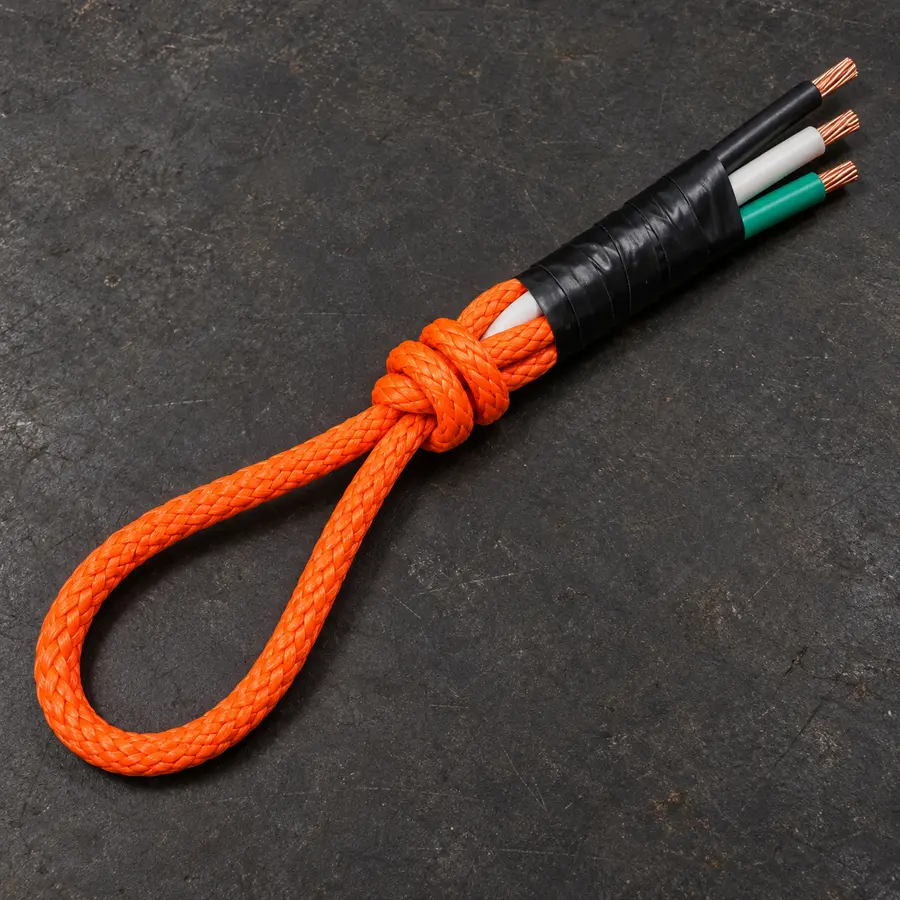
Electrician’s pulling hitch
Best for: attaching pull rope to a small, properly prepared conductor bundle.
- Stagger the conductor ends so the pulling head tapers instead of forming a blunt edge.
- Lay the rope beside the conductors with enough tail to make several tight wraps.
- Wrap the tail firmly around the bundle and standing rope, working toward the conductor ends.
- Finish with secure half hitches, then tape the entire head smoothly in the direction of pull.
- Pull-test the connection before it enters the raceway.
Field tip: For heavy pulls, long runs, or large conductors, use an approved pulling grip and follow the conductor manufacturer’s pulling-tension limit.
02
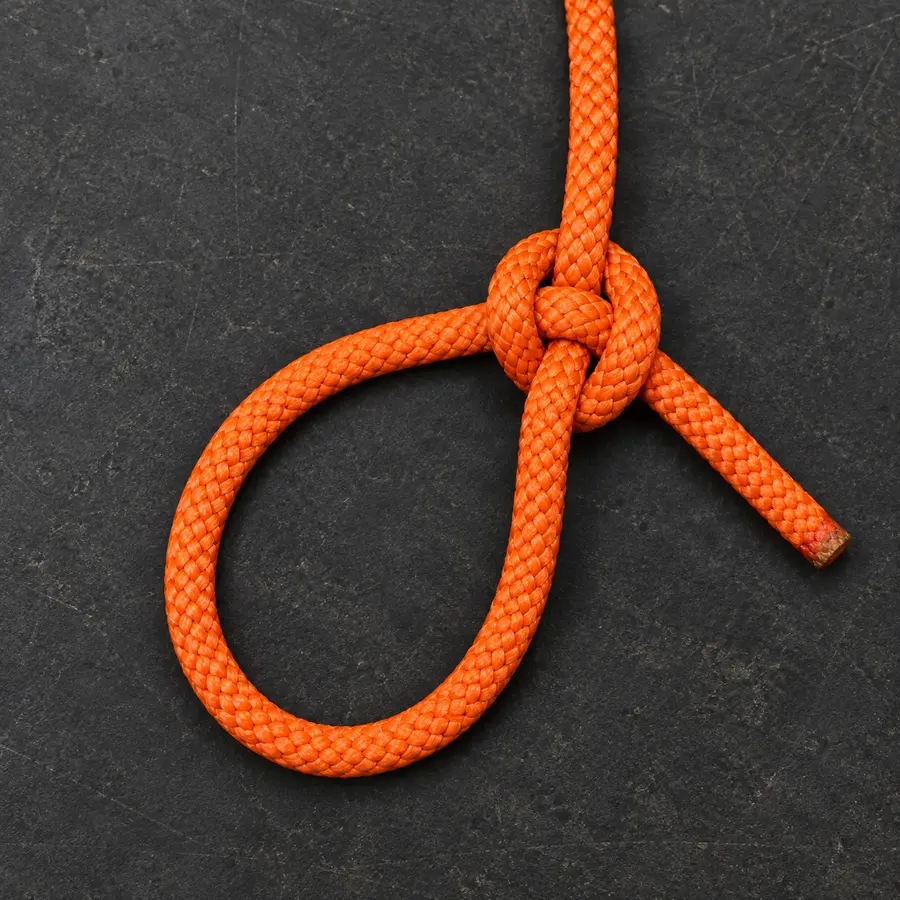
Bowline
Best for: making a fixed loop that will not tighten around an object under ordinary load.
- Make a small loop in the standing part of the rope.
- Pass the working end up through the small loop.
- Take the working end around the standing part.
- Bring it back down through the small loop.
- Dress the knot neatly and pull all parts tight. Leave a generous tail.
Memory line: “Out of the hole, around the tree, and back into the hole.”
03
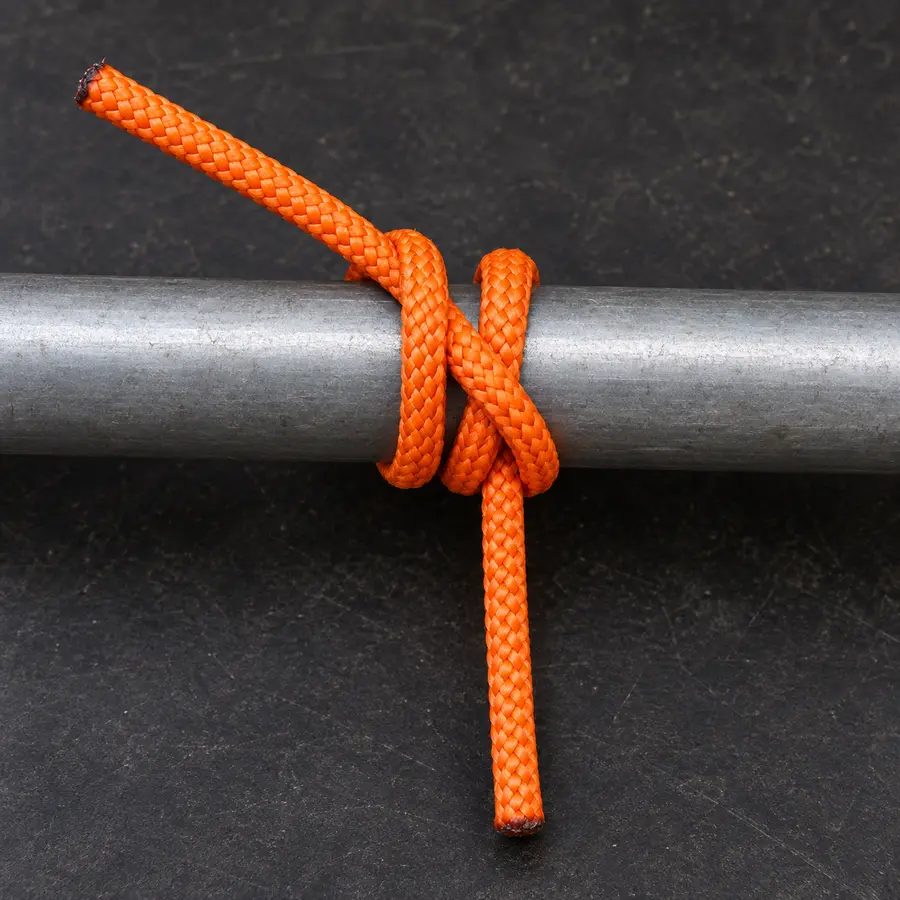
Clove hitch
Best for: a quick temporary attachment around pipe, conduit, or a post.
- Wrap the working end completely around the object.
- Cross over the standing part to form an X.
- Wrap around the object a second time.
- Tuck the working end under the crossing section of the X.
- Pull both ends in opposite directions and dress the two wraps side by side.
Field tip: A clove hitch can slip or roll when the direction of pull changes. Add a backup half hitch when appropriate.
04
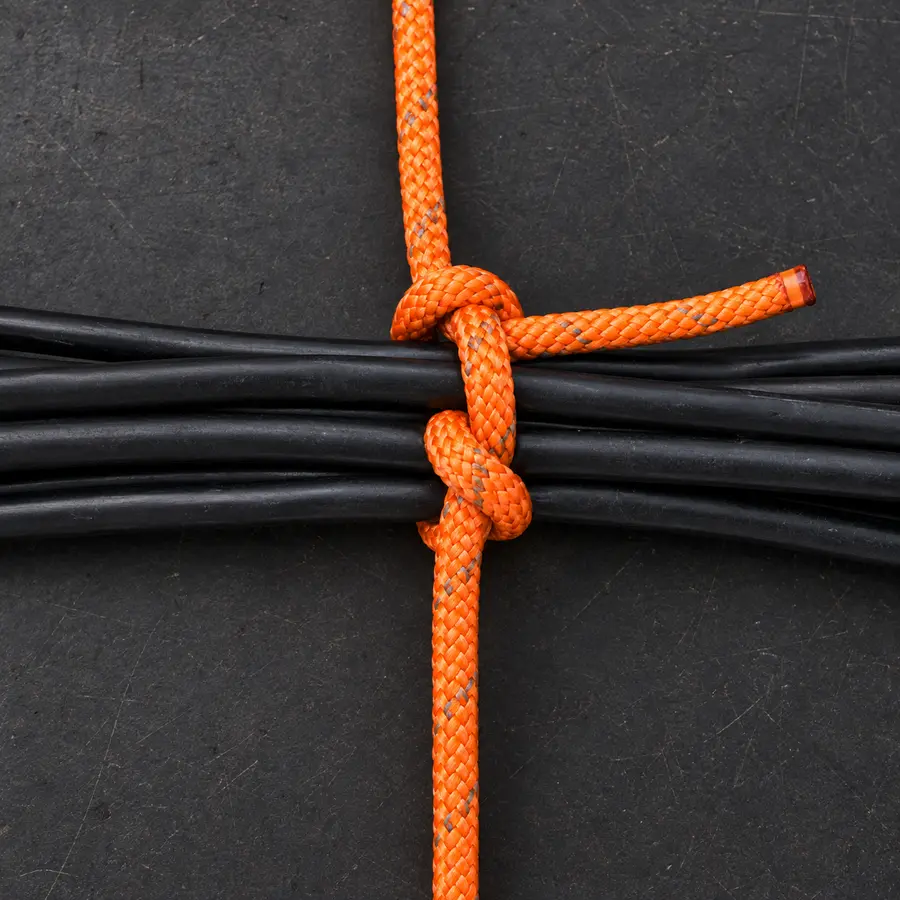
Two half hitches
Best for: backing up another knot or making a simple temporary tie around an object.
- Pass the working end around the object.
- Bring it over the standing part, then through the loop you created.
- Pull the first half hitch snug.
- Repeat the same move in the same direction for the second half hitch.
- Dress both hitches together and leave enough tail.
Field tip: Two half hitches are simple and useful, but they are not a substitute for a rated pulling grip or engineered rigging.